


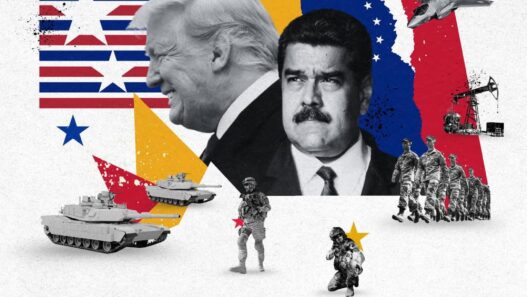

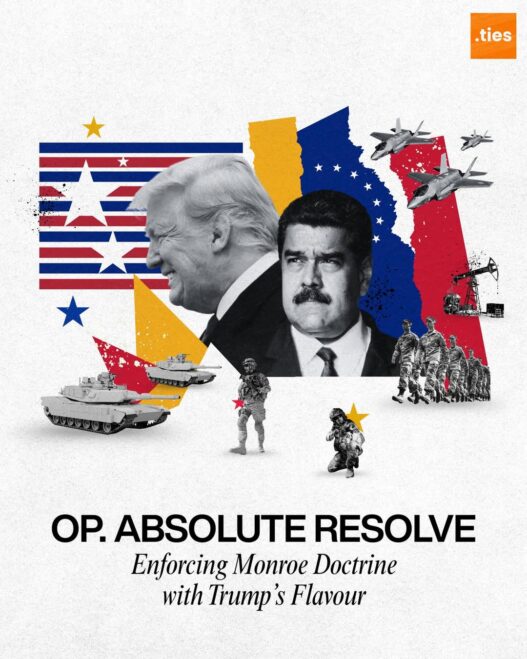
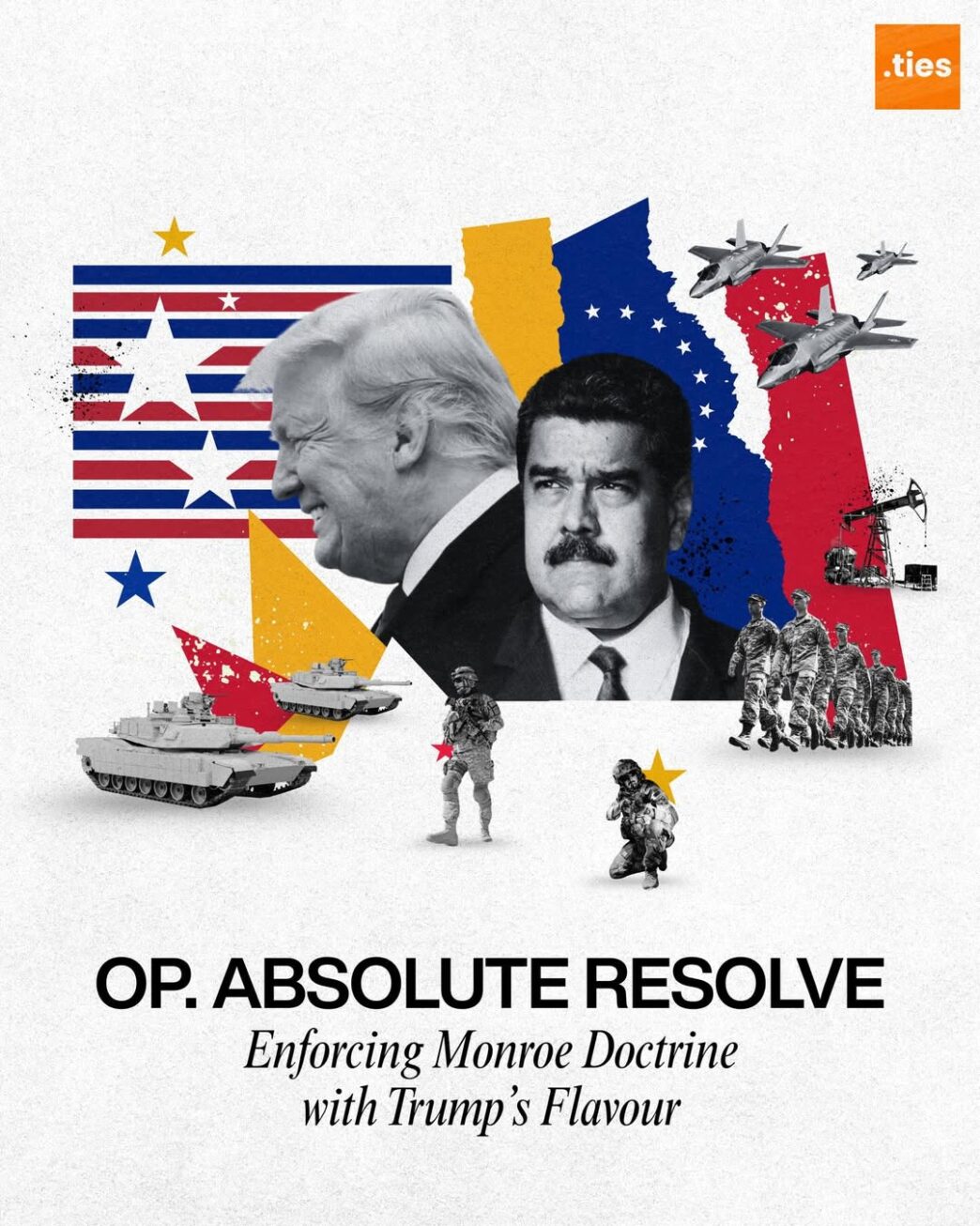
On January 3, 2026, the United States carried out a large-scale military strike on Venezuela. U.S. President Donald Trump said Venezuelan President Nicolás Maduro and his wife had been captured and removed from the country, adding that Washington would now “run” Venezuela till a “safe, proper, and judicious” transition of power is achieved. He has further stated to restart the oil production in Venezuela.
Op. Absolute Resolve
Explosions were reported across Caracas around 2:00 a.m. local time, with witnesses citing low-flying aircraft and smoke near major military installations like Fort Tiuna and Generalissimo Francisco de Miranda Air Base. The FAA issued a NOTAM restricting flights over Venezuelan airspace due to “ongoing military activity”. The strikes followed earlier U.S. operations targeting suspected Venezuelan drug-trafficking vessels & ports by drones and carrying a maritime blockade of the nation under Operation Southern Spear since September 2025.
President Donald Trump has accused Venezuelan cartels of infiltrating the USA with ‘narco-terrorism’, even alleging that President Maduro is part of the network, hence carrying out Operation Absolute Resolve to capture him.
Reaction from Venezuela 
Venezuela declared a state of emergency and denounced the attack as “imperialist aggression,” calling for an urgent UN Security Council meeting. Vice President Delcy Rodríguez demanded proof of life and the location of Maduro, further asking for their liberation. She has been appointed interim President, and along with Defence Minister Vladimir Padrino Lopez, has announced that they will defend the nation and its strategic resources.
Opposition leader María Corina Machado had previously welcomed increased pressure on Maduro, praised Trump, and dedicated her Nobel Peace Prize to him.
Legality of the operation questioned
In the U.S., Democratic Senator Ruben Gallego called the war illegal, while Republican Senator Mike Lee questioned its constitutionality, citing the lack of congressional authorisation. This suggests the possibility of lawfare against the Trump administration. Internationally, Colombia’s President Gustavo Petro urged emergency UN and OAS meetings, as Cuba, Iran, and Russia condemned the strikes. Chile criticised the action, while some EU officials questioned Maduro’s legitimacy.
India has expressed concern about the incident, urging the parties to resolve their differences through dialogue and diplomacy. It has also issued an advisory for Indians living as well as travelling to Venezuela.
Future of Venezuela
Trump said the operation was coordinated with U.S. law enforcement and that Maduro would face drug-trafficking charges in New York. He said the U.S. would manage Venezuela’s oil production and sales by being “in the oil business”, claiming proceeds would benefit Venezuelans. Trump further made a statement that Venezuelan oil to be utilised by countries dependent on Russia for energy security.
He also added that Venezuela’s vice president was prepared to cooperate and do “whatever he needs”, contradicting her earlier official statements.
Conclusion
The strikes raise questions about their legal justification in the U.S. and abroad. Critics note the contrast between Western opposition to Russia’s invasion of Ukraine and the response to events in Venezuela, while supporters argue Maduro’s U.S. convictions could limit political fallout if the operation ends with just his removal and positioning of a more “suitable” leader in his place.