





Religion in Contemporary Asian Statecraft as Ideology.
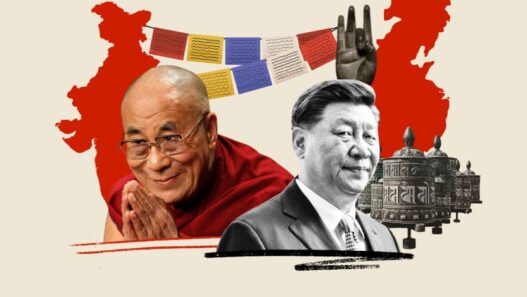
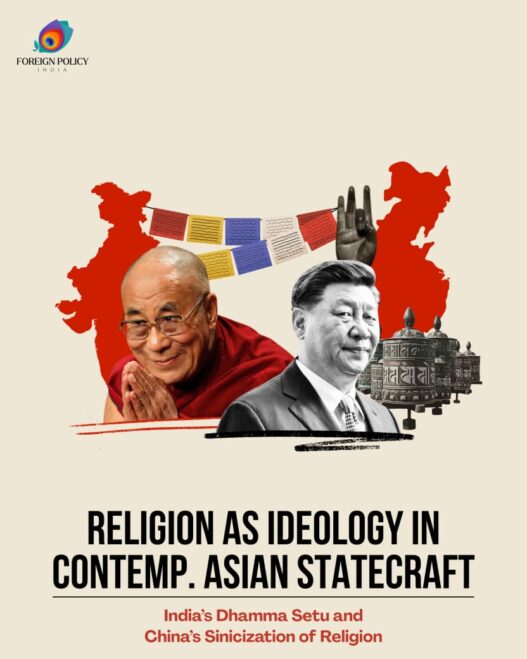
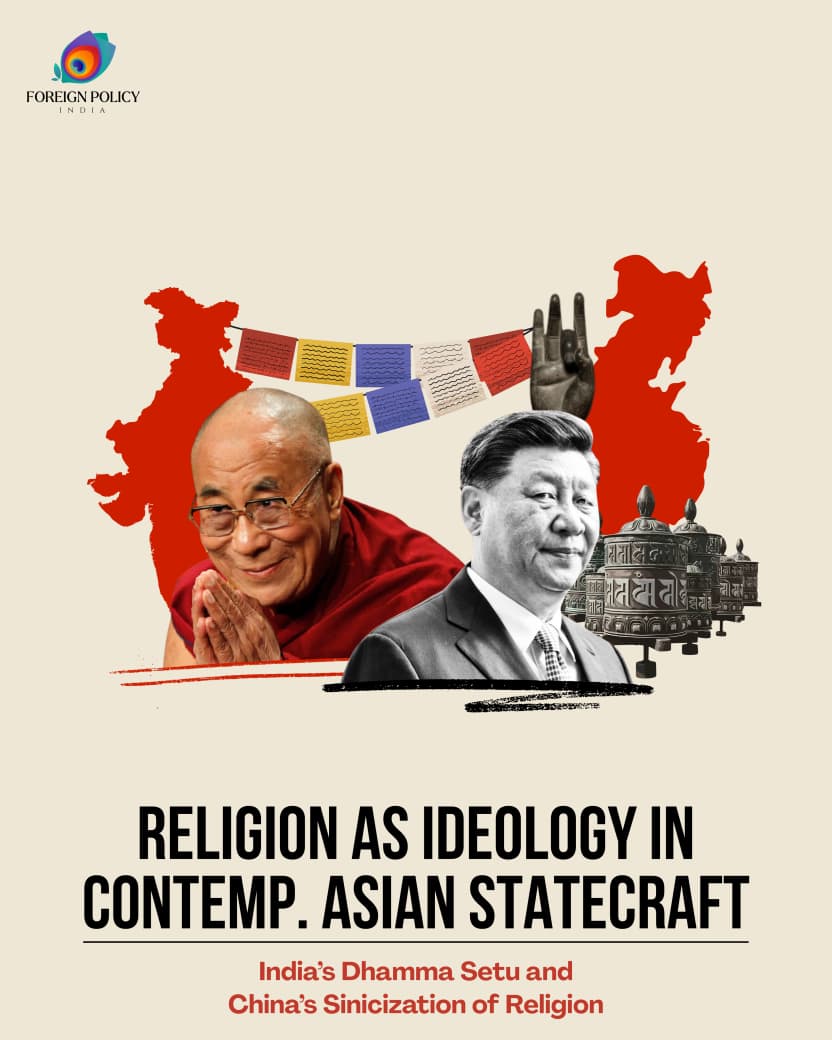
Religion has come into the limelight as a significant ideological sector of state power in modern Asia. India and China are two distinctively opposite examples in their approach to Buddhism and religion as such. Whereas India projects Buddhism into the world as a civilizational and ethical bridge, often described as Dhamma Setu, China is attempting to reshape and manage religion via its policy of sinicization, under which religion becomes subservient to the party.
Sinicization of Religion in China as political compliance. 
The Sinicization of religion has been institutionalized by the Chinese Communist Party (CCP) as a form of ideological control with the help of coercive mechanisms under President Xi Jinping. Sinicization was introduced on paper in 2016 and codified in 2018, after which all religious institutions were required to be brought into line with Marxism, socialism with Chinese characteristics, and loyalty to the CCP. Supervision has been centralized under the United Front Work Department and religious autonomy has been severely curtailed and international religious connections have been broken.
Sinicization goes beyond regulation all the way to theology, education, architecture, and ritual performance. Party propaganda is supposed to be entrenched by the religious leaders in the sermons, and this is enforced through surveillance technologies. This policy has led to the mass detention, erasing of the culture and reorganizing of Islam and Buddhist institutions into state power tools, in places like Xinjiang and Tibet. The religion in this model is condoned only to the extent that it strengthens political obedience.
The Dhamma Setu of Buddhism: the moral soft power of India.
Conversely, India has established itself as an international guardian of Buddha Dhamma, and has projected Buddhism as an active source of moral support rather than a means of coercion. India, through symbolic diplomacy, sacred sites restoration, international Buddhist summits and civilizational outreach, sells Buddhism as a medium of interconnection between countries through the similar values of compassion, non-violence, and coexistence.
This method appeals not only to the rebirth of Dhamma in India through the propagation of Vipassana, but also to the redefinition of Buddhism as a moral and social revolution that was based on equality and fraternity that was applied by Ambedkar.
Conclusion
In the final analysis, India and China are opposing ideological projections: one tries to gain authority by making moral appeals and common civilizational memory, the other by imposing authority by political means. The ideological battle over Buddhism is therefore a more fundamental fight over the place of beliefs, morality and autonomy in the contemporary Asian state.