







The Government of India, last week, asked Imran Khan to leave India. This is not the Imran Khan that one might have assumed to be caught in any drama other than in his movies. This Imran Khan never bowled left-arm pace, nor did he run Pakistan from a jail cell. Instead, this is Imran Khan who played the boy-next-door lead in Jaane Tu… Ya Jaane Na, and is Aamir Khan’s nephew. He carries an American passport in one pocket and an Overseas Citizen of India (OCI) card in the other.
On 10th October he stood with protesters at Mumbai’s August Kranti Maidan. Five days later, the Foreigners Regional Registration Office (FRRO) ordered him to leave the country by 28th October.
The Backstory
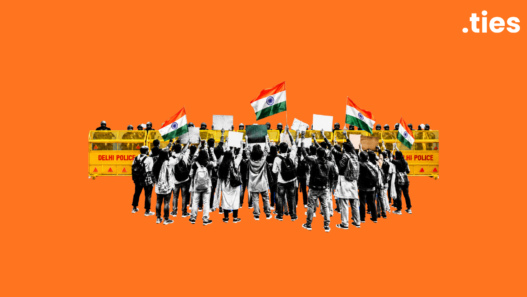
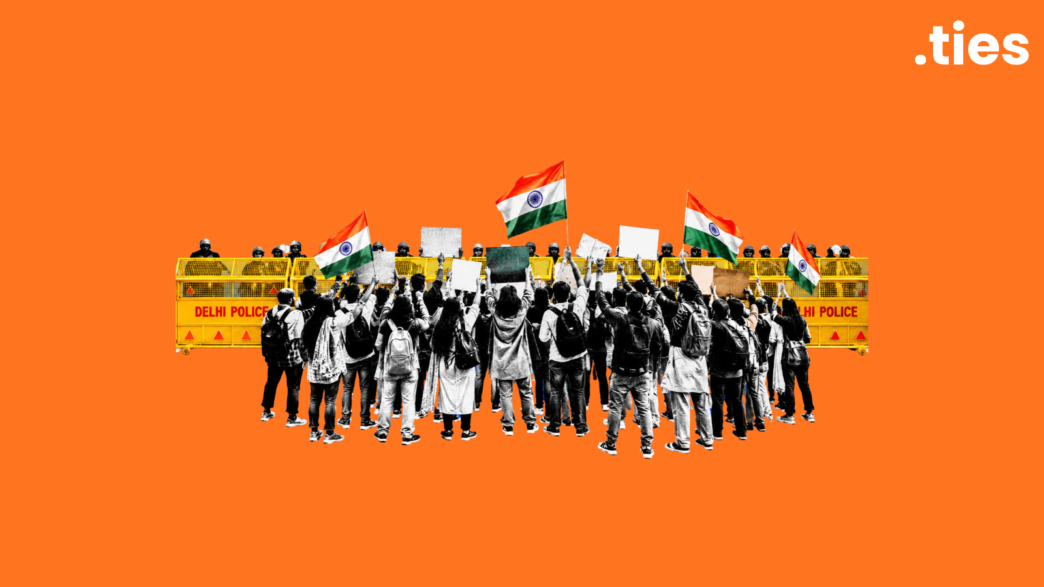
The demonstration led by the Cockroach Janta Party (CJP) was ongoing for days, demanding the resignation of Chief Election Commissioner Gyanesh Kumar over allegations of vote fraud charges that the latter denies. This is the protest that Khan joined in and was briefly detained for. It might have ended there, but things went awry for Khan when BJP leader Kirit Somaiya complained to police that a foreign national had no business at a political demonstration. The complaint reached the FRRO, which served a ‘Leave India’ notice under Sections 7(2)(c) and Section 29 of the Immigration and Foreigners Act, 2025. This law came into effect in September 2026, replacing the hold of older statutes including the colonial-era Foreigners Act of 1946. Khan’s lawyers have moved the High Court, with their defence being: show us the rule that says an OCI cardholder cannot protest.
A noteworthy irony of this instance is that the August Kranti Maidan is where Gandhi launched the Quit India movement in 1942. Eighty-four years later a man standing on the very same soil is being told to do just that.
What the card gives and what it keeps back
The OCI scheme was an initiative under the Vajpayee government. Since December 2005, it has been a method of outreach to the Indian diaspora. About 5 million people hold this card today. This is an A1 scheme on paper. In fact, it seems generous with a lifelong multiple-entry visa, the right to live and work in India indefinitely. Additionally it provides parity with non-resident Indians in most economic, financial and educational matters.
But, what is law and economics without a few exceptions? Section 7B of the Citizenship Act 1955 makes one aware of the not-so-greener side of the OCI card. An OCI cannot vote, they cannot sit in Parliament or a state legislature. Being a President, Vice President or a judge of the courts is also off the cards. They cannot secure a government job unless the Centre makes a specific exception. An OCI cannot buy land within Indian territory either.. In addition to this, since a Home Ministry notification in March 2021, an OCI needs special permission for carrying out any research, journalistic work, missionary or Tabligh activities, mountaineering, internships or employment with foreign missions and visits to protected or restricted areas.
Among these privileges and prohibitions for an OCI, one thing does not appear on the list: attending a protest.
Aristotle would have had opinions
Some 2,300 years before the FRRO, Aristotle underscored who a true citizen of the polis is. In his magnum opus, Politics, he mentions that a citizen of the state is one who has the power to take part in the judicial administration. So, a citizen, for Aristotle, means someone who gets a say.
The sociologist T.H. Marshall split citizenship into three bundles: civil rights, political rights and social rights. The OCI card very well hands over social rights, with a little exposure to civil rights as well. But holds back the bundle of political rights.
The Indian Constitution itself narrates through Article 14, equality before the law to “any person”. Article 19, that ensures freedom of speech and peaceful assembly, begins with the words “All citizens shall have the right”. The framers of the Constitution understood the difference between a person and a citizen, and mentioned so explicitly and deliberately.
The government’s case
Every country reserves the power to choose and only entertain the activities of its own citizens. Just like the United States will not like a foreign national donating much as they donate to a campaign, the Indian government also holds sovereignty over such concerning matters. An OCI card, whatever its privileges, is not a membership but merely a long-stay visa wearing a name.
Section 7 of the Immigration and Foreigners Act, 2025 lets the government regulate a foreigner’s presence and conduct. Its clause 7(2)(c) lets it direct that a foreigner “shall not remain in India or in any area therein,” if their activities are deemed restricted or in violation of executive orders. Section 29 allows removal on a security report. Additionally, a September 2025 notification has already delegated these powers to FRROs across the country. Under Section 7D of the Citizenship Act the OCI registration itself can be cancelled for violating any law the Centre notifies or in the interests of the “general public”. And of course, an agitation demanding the resignation of the country’s chief election officer is hardly a book club, so the government’s action was rather foreseeable.
A look at both sides, simultaneously
Although the 2025 Act stays silent and lists no provision that expressly bars a foreigner from attending a protest, the government stands clear that an OCI card is a lifelong visa and granting of a visa is a sovereign function, thus no foreign national can claim it as a matter of “right.”
But since the 2021 MHA notification lists permission required for mountaineering and journalism, but not demonstrations, Khan’s lawyers can argue that if the state wanted to keep foreigners away from protests, they could have explicitly written it into the 2021 list. They knew how to write it, however chose not to.
One might claim that New Delhi’s own words cut both ways too, when Prime Minister Narendra Modi told the diaspora at Pravasi Bharatiya Divas in 2023 “I consider you all pravasi bharatiyas, the brand ambassadors of India on foreign soil.” Although, one can counter by stating that the quote was meant to embrace the Pravasi Bharatiyas as family, but never stood as a promise of political rights on Indian soil.
Look at the democracies everywhere: Singapore makes foreign nationals take a permit even to join an event at its designated protest venue, the US cancelled hundreds of student visas over campus protests last year, and Britain can refuse anyone whose presence is “not conducive to the public good.” Every democracy keeps their politics for their citizens, and not for an overseas one.
The verdict is yours
Over the past decade, over a hundred OCI registrations have been cancelled under Section 7D, reportedly over alleged anti-national speech. Cancellation under this section promises a fair hearing first. But a ‘Leave India’ notice under Section 7 guarantees none. Khan’s only remedies are a plea to the office that ordered him out, i.e. the FRRO, or the High Court.
Both sides are standing on a principle. One says a democracy’s politics belongs only to its citizens. The other says a resident who owes duties to a country, earns a voice in it too, whether in possession of the OCI card or not. Between them sits a plastic card that promises belonging on one side and prints its limits on the other. Somewhere between the Home Ministry and the High Court someone will decide how much weight the word “citizen” in “Overseas Citizen of India” actually carries. Until then, the verdict is yours.
Edited by Tashvi