







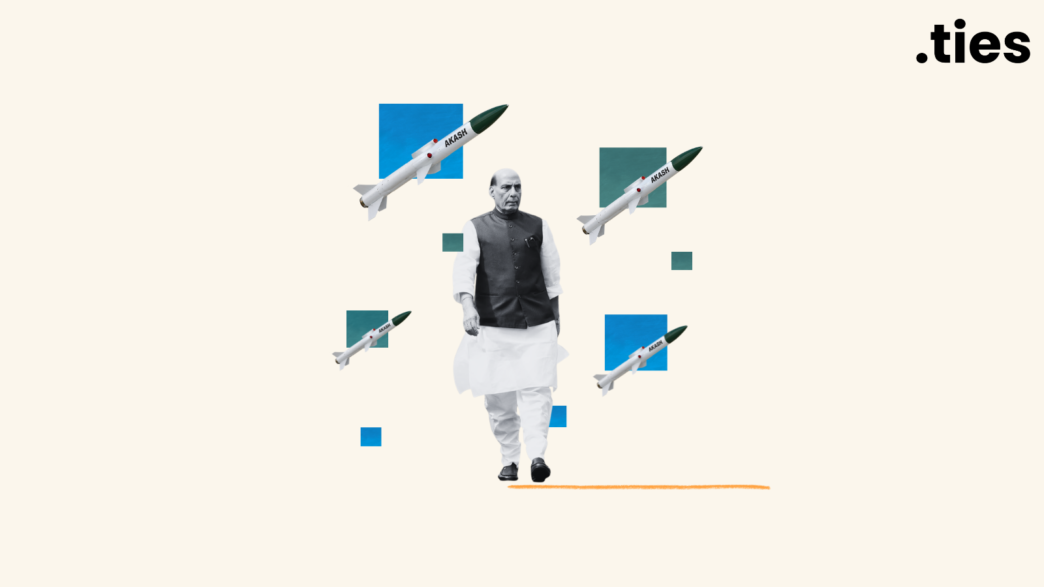
For decades, Central Asia bought its air defence from one supplier, Moscow. That may be changing. Former DRDO chief Samir V. Kamat has said India exported its Akash surface-to-air missile defence system to Tajikistan and Turkmenistan. These would be India’s first reported missile sales in the region.
In August, both countries were reported to be still negotiating for the Akash Mk 1S. Until paperwork or photographs of launchers in either country appear, these remain credible but unverified sales.
The case for buying Indian starts with what these countries currently field. Turkmenistan relies on Soviet-era Kub, Osa and Strela-10 systems, and Tajikistan operates eight ageing S-125 launchers. Akash, built by Bharat Dynamics with DRDO’s Rajendra radar, is a modern replacement.
It has a 4.5-25 km range and a Mach 2.8 missile, and a single radar can track and engage several aircraft, drones or cruise missiles at once. The Mk 1S adds an Indian-made seeker in the missile’s nose that steers it through the final seconds of flight. That makes the missile harder to jam and more accurate against targets that manoeuvre.
India also has a template. Armenia signed a $230 million Akash deal in 2024, began receiving deliveries late that year, and then bought Indian radars, artillery and rocket launchers. A single missile sale turned into a lasting supply relationship, and New Delhi wants the same outcome in Central Asia.
Russian defence analysts have complained that Moscow’s own technology transfers to India built the competitor now taking its market. This is not a clean switch, though. Both buyers also operate China’s FM-90, a copy of Russia’s Tor, so they are spreading risk across several suppliers. For India, that is enough. Becoming one of the options in Russia’s backyard is itself a strategic gain.