





Between Protocol and Power
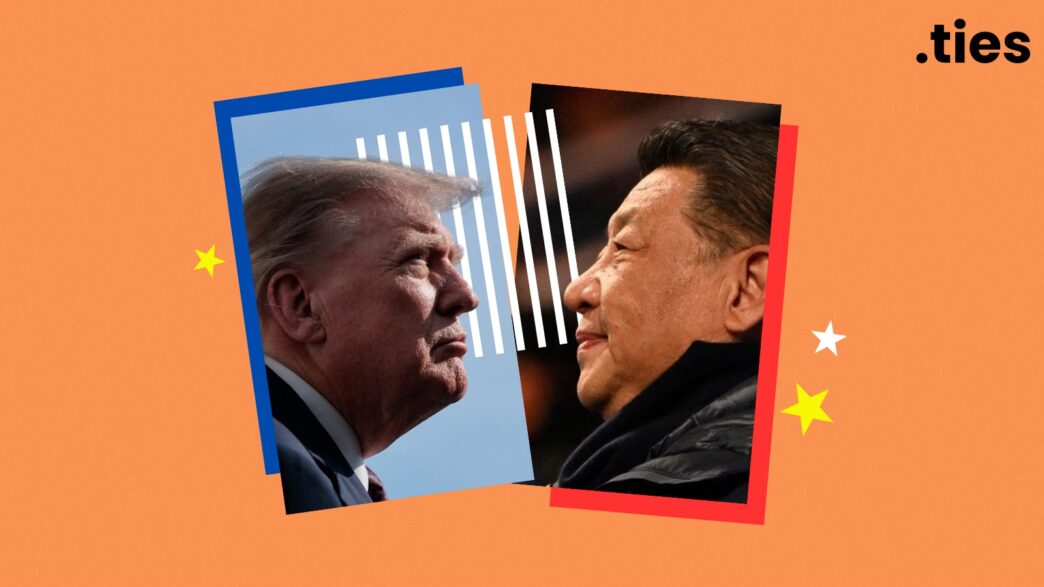
President Xi of the People’s Republic of China paid a state visit to the United States of America from 23 to 25 September 2026, his first in over a decade, four months after US President Donald Trump’s state visit to Beijing.
The year 2026, for the US-PRC Relations, has been an unusual one. The reason for the assertion is that this was the second face-to-face meeting between the leaders of Washington and Beijing, the two countries locked in a fierce strategic rivalry.
The White House Summit was preceded by the Beijing Summit in May, 2026 when Trump paid a state visit to the PRC, agreeing to build “a constructive China-US relationship of strategic stability.”
The more questionable development was that Trump himself arrived and welcomed Xi at Joint Base Andrews on a red carpet. This has been unusual in the history of the US-PRC since the bilateral relationship formalized in 1979, following the Nixon-Mao dialogue of 1972.
The Strategic Rivalry, Managed
During the talks at the White House, Xi and Trump reached consensus on recommendations for more favourable tariff treatment for respective exports and imports on USD 30 Billion of trade between them. The tariff reductions would apply to US exports such as agricultural goods, wood and cosmetics, as well as US imports including small appliances, toys and holiday decorations.
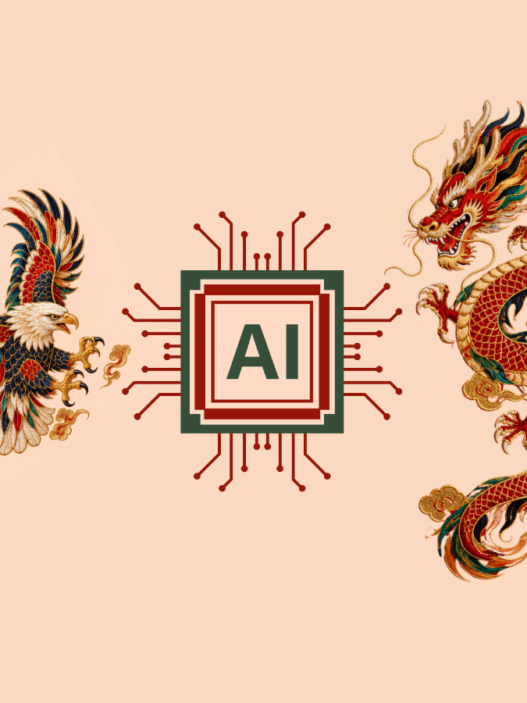
Considering the rapid scaling and development of Super Intelligence and AI, Washington and Beijing announced a “US-China Super-Intelligence Dialogue,” a kind of a hotline to keep track of each other’s AI Developments.
The next exchange is due by November 2026. The two sides also decided to “Operationalise” Boards of Investment and Trade, which the PRC readout supposedly did not mention, an outcome of the May Beijing Summit.
The respective boards are established to manage trade tensions and to discuss potential investments in non-sensitive sectors such as agriculture. Washington said China would take at least 10 million metric tonnes of US coal in each of 2027 and 2028. This is separate from the tariff package of USD 30 billion.
One tangible outcome, considering the intense mistrust and rivalry, was the extension of the trade truce reached in Busan, South Korea in 2025 by two months. However, tensions still linger as Washington objected to PRC’s continued delays on granting approvals for rare earths and critical minerals necessary for defence and high-tech needs such as chips, magnets, military equipment, etc.
The same pattern holds on rare earths. Washington wanted a restored flow of magnets and metals for chips and military equipment, and Chinese customs data released just before the summit show it did not get one. Shipments of permanent magnets to the United States fell to 512 tonnes in August, 21 percent below July and 13 percent below a year earlier, and still short of the 2024 monthly average of 621 tonnes. The controlled metals fell harder, from 29 tonnes in July to 6 in August. The United States was the only major buyer to take fewer Chinese magnets in the first eight months of 2026 than in the same months of 2024, even as exports to Europe, South Korea and India rose. The data shared signal that PRC will continue to leverage its dominance in Rare Earths and refining equipment against Washington to extract concessions and softer language on the PRC’s Red Lines.
The most important development was that Xi urged the US to “oppose Taiwan independence and handle the Taiwan question with caution.” This wording is a public call for Trump to change Washington’s stance. This was a clear signal to Washington that for the relationship to be “stable,” the White House must shift its Taiwan Policy and stop its military cooperation with Taipei. However, Washington has a different perception and policy in regard to Taiwan; it is bound by the 1979 Taiwan relations act to supply weapons and support to Taipei and it is a bipartisan consensus within Washington to continue cooperation with Taiwan, though considering Trump’s transactional nature, his administration has reduced the decades-old relationship into a negotiating chip to continue conversations with the PRC.
Such a posture highlights Beijing’s growing assurance regarding its capacity to shape cross-strait and trilateral dynamics, while simultaneously seeking to establish “a regulatory framework to govern prospective Washington-Taipei ties.”
On the Iran war, Trump and Xi agreed that Iran must not develop a nuclear weapon and that no country should charge tolls on international waterways, language aimed at the Strait of Hormuz and largely a restatement of what they had already said in Beijing in May. Xi pressed for a return to the June Islamabad Memorandum, the deal meant to halt the war and reopen the strait, and Chinese diplomats later offered ideas on its disputed clauses. Trump separately warned that any Chinese help to Iran, whether intelligence, parts or weapons, was “totally unacceptable.” Ambassador David Perdue said Xi gave assurances and that Beijing had already “pulled some things down,” though he cited no direct evidence that China was helping keep Hormuz closed. What was not agreed is the point: no ceasefire, no reopening of the strait, and no Chinese cut in Iranian oil purchases, which Beijing privately told Tehran it would not make under American pressure.
The Cognitive Dynamic, the Equation Intensifies
The perspective is clear in hindsight that the dialogue mechanisms between military and civilian leadership of Washington and Beijing are for managing their escalating strategic rivalry, rather than cooperation. Aside from the counter-narcotics which were done for optics. The tensions will persist, escalate in the military, high-tech supply chain including but not limited to Semiconductors, Quantum applications, Chips, AI and the broader supply chain dynamics marked by export-controls and weaponisation by the Chinese and the Americans.
Moreover, just before the summit, there were alleged reports that PLA had sensitive cargo of US F-35 fighter jets at Hong Kong, signalling that the adversarial nature of the relationship will define their engagements.
Impacts on India
India is affected less by what was signed than by the order of the visits. Xi was in Delhi on 13 September for BRICS, his first trip since Galwan, and on a red carpet in Washington ten days later, which tells Beijing it can settle with Trump and leave the India file for later. The parked Taiwan arms package, about $14 billion, is the part Delhi should actually watch. A White House that will hold back weapons to keep a trade truce alive is a less reliable Quad partner, and Pakistan can read that as plainly as India can. The two-month extension also dulls the case for shifting factories out of China, even though Chinese magnet sales to India rose this year while sales to the United States fell. The rivalry was managed, not eased, and India was not in the room where it was managed. The warmer ties get in optics between the Dragon and the Eagle, the bolder the Dragon becomes and continues grey-zone warfare and aggressive tactics against India. The PRC will continue its support to the military regime in Rawalpindi and won’t cease its information operations against India. In short, Trump has given Zhongnanhai greater manoeuvre to hedge and operate against New Delhi.
Between Warmth and the Quill
Underneath the warmth, the rivalry has not softened. The Xi-Trump summit last week was not a breakthrough. Rather it was another attempt by the two world leaders to set guardrails in an endeavour to fence their strategic rivalry within bounds. These leaders will meet again at the APEC and the G-20 summit this year to gauge each other’s policies and actions. However, one thing is crystal clear: the US-PRC relationship is the most consequential relationship in the world, one that can possibly reshape international relations and strategic competitions across the globe.
The porcupine in the title is Schopenhauer’s parable, not a slogan. In winter the animals huddle for warmth and then prick one another with their quills, until they settle at a distance cold enough to endure and close enough to survive. Washington and Beijing are in that winter. Each needs the other, on trade, on the war with Iran, on the risk that Artificial Intelligence outruns both capitals, and each is covered in quills: tariffs, export controls, Taiwan, technology bans. The summit was an attempt to find that distance, not to pull the quills. There is a second echo. Taipei’s own porcupine strategy is the bet that a smaller defender can make an invasion too painful to attempt, and Xi arrived in Washington asking Trump, in effect, to trim those quills.
–
Edited by Rishit Anand and Damini Agrawal